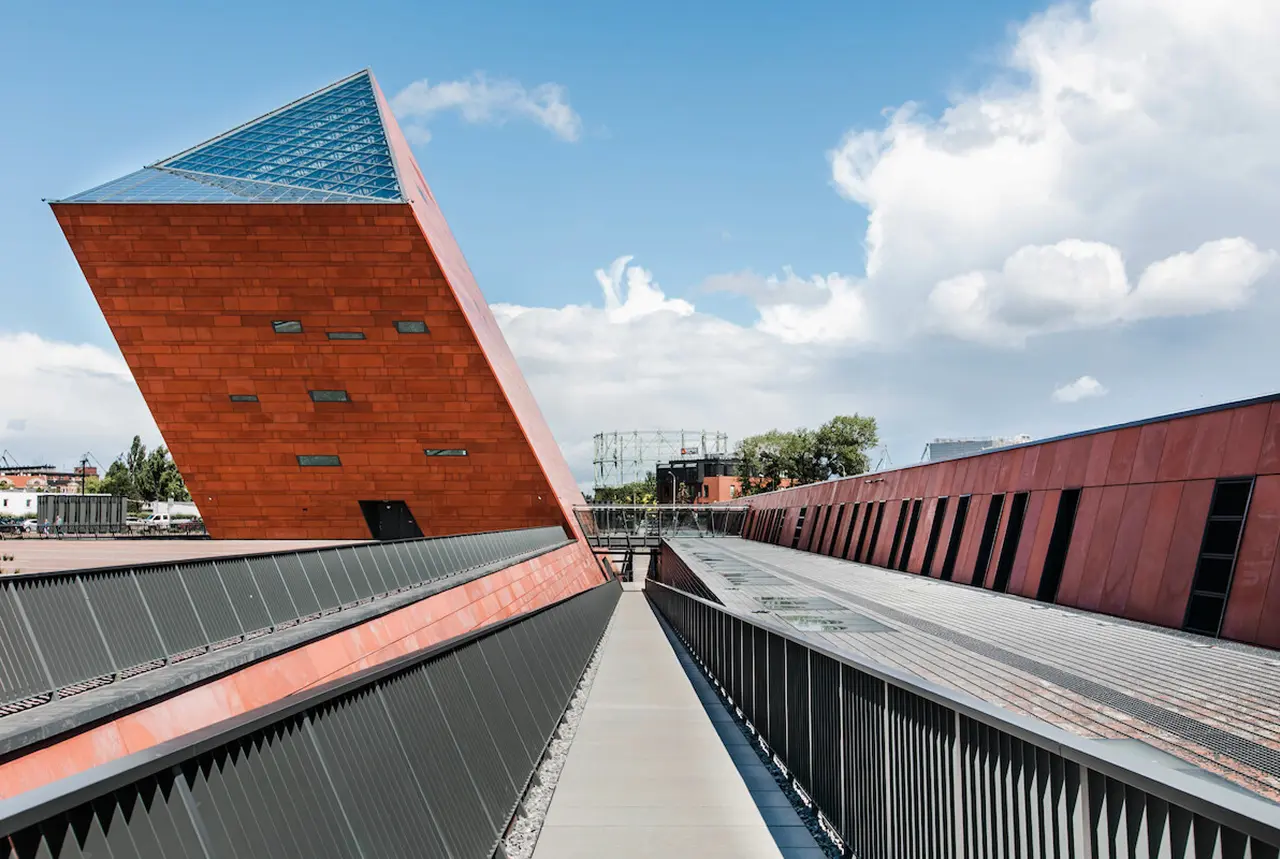

On Sunday 24 May at 2.00 pm, we invite you to the Museum of the Second World War for a curator-led tour entitled ‘When did the Second World War begin and end?’, led by Jędrzej Piekara, PhD.
When did this most tragic conflict in history truly begin and end? Do its chronological boundaries mean the same thing to everyone? Were we dealing with a „second Thirty Years’ War”, or perhaps with a conflict that falls on different dates than those we have come to accept: 1st of September 1939 – 8th of May 1945?
A curator-led tour of the exhibition will be an opportunity to discuss how national narratives and historical policies reinterpret the past, and why the symbolic date of the war’s end continues to divide Europe to this day. During the tour, we will reflect on the fates of the countries of Central and Eastern Europe, caught between a triumphant East and West. For our region, the end of the war brought a painful paradox: the end of armed conflict did not mean the recovery of freedom, but rather the beginning of a new, communist occupation.
Jędrzej Piekara, PhD – historian, researcher in the Research Department of the Museum of the Second World War, graduate of History at the John Paul II Catholic University of Lublin (KUL). His research focuses on history of historiography and on Soviet ideology, in particular the concepts of the „new man” and the „new socjety”.

