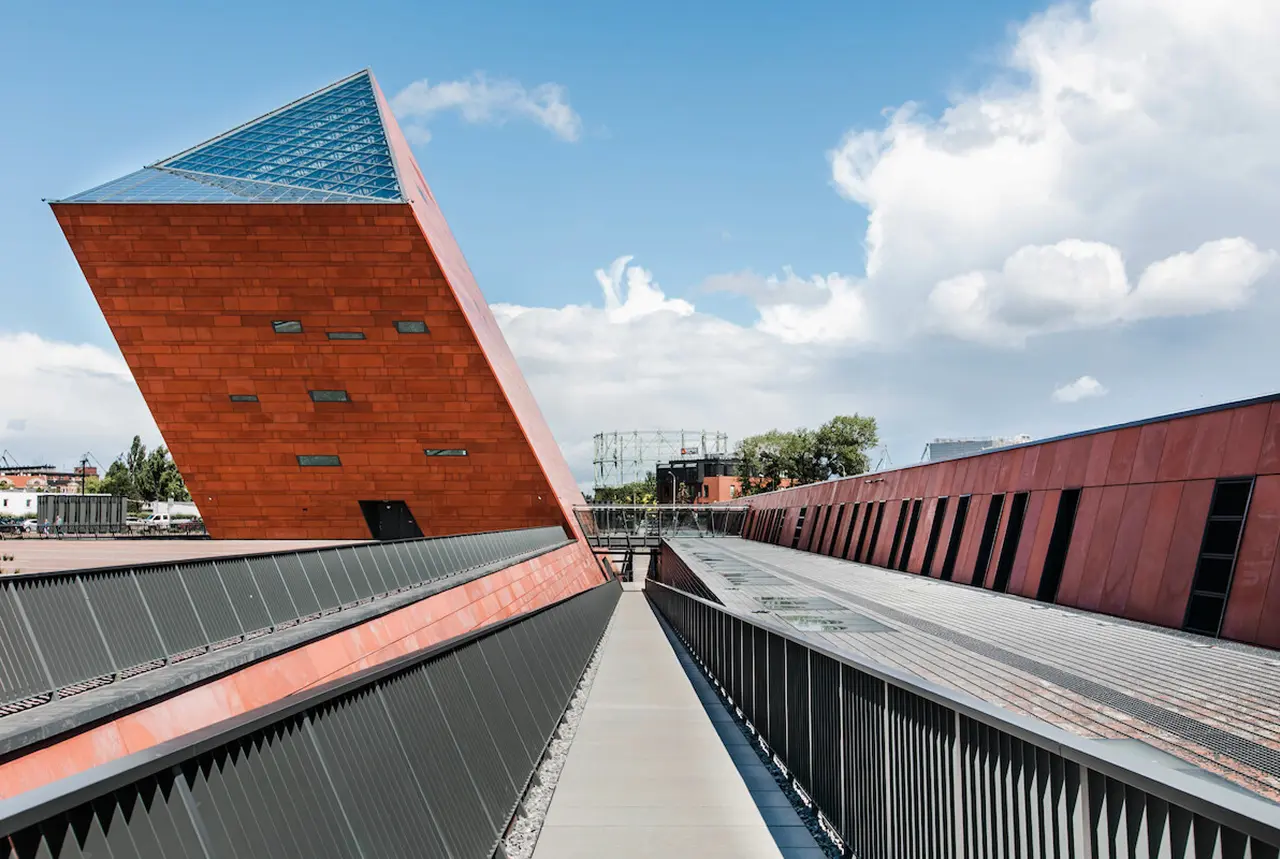

The building of the former power plant was modernised during the second stage of the Westerplatte Museum investment project, carried out by the Museum of the Second World War in Gdańsk.
About the Power Plant Building
Crucial for the Polish Military Transit Depot, this utility building was included in the first plans for the development of the Westerplatte area in 1924, in the south-eastern part of the Munitions Basin. Work on the construction began on 25 May 1926. By the end of the year, the Power Plant was received by the Polish side. The brick building was erected on a rectangular plan with sides measuring 13×27 m.
The total usable area of all its rooms was approximately 350 m2. However, the building required further work, such as adding specialised equipment to ensure the complete independence of the Polish facility from electricity supplies from the Free City of Gdańsk. This was achieved in 1928. The building was equipped with a transformer station, combustion generators and pumps, which enabled electric cranes to operate during the unloading and loading of materials in the Munitions Basin.
The Power Plant was not included in the peninsula’s defence system. From the anticipated landing from the Munitions Basin, it was to be protected by an emplacement prepared about 170 m to the east. Interestingly, despite the bombing of the area and heavy artillery fire in September 1939, the building survived almost intact. This was not the case during the 1945 offensive, when both the Power Plant and the Munitions Basin were severely damaged. However, the facility was quickly rebuilt, retaining its original shape.